An arpeggio can be built from any chord regardless of quality, and it is a relatively easy process depending on the voicing. Below I will take you through building four different arpeggios from four separate chord voicings which are as follows:
- D dominant seventh flat five (D7(♭5))
- E diminished seventh (E⁰7)
- E dominant seventh sharp ninth (E7(♯9))
- A dominant seventh suspended fourth (A7sus4)
- Summary
This group of voicings will give a well rounded overview of building arpeggios from chords. Each chord-to-arpeggio section is in tandem with the chord and arpeggio shapes further below this document.
D Dominant seventh flat five chord & arpeggio
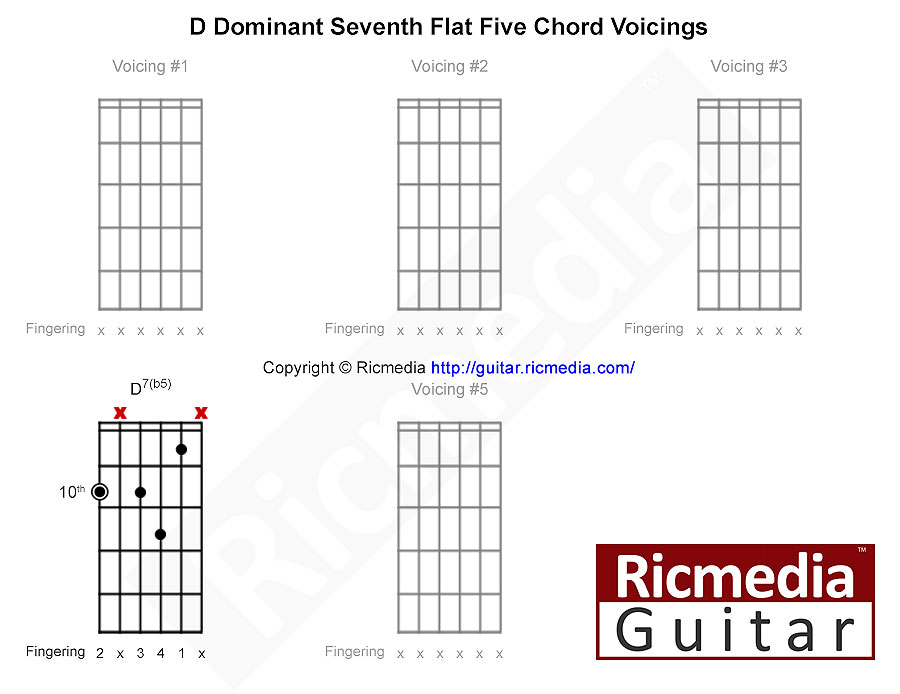
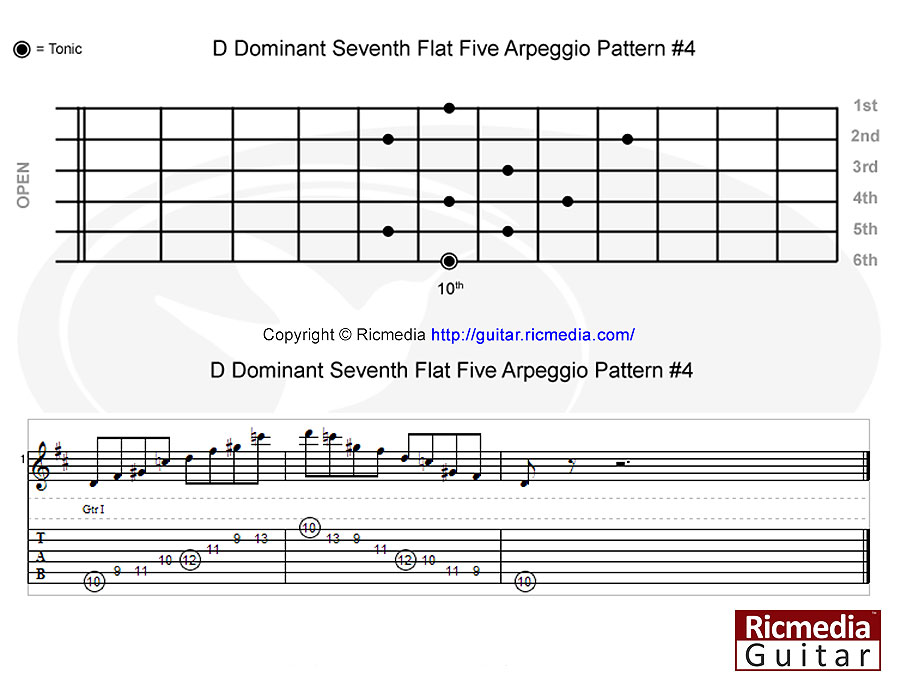
OK let’s begin with the D dominant seventh flat five chord. As the root of the chord is on the sixth string we can safely assume it is based upon either position #3 or position #4. Now looking at the major third interval on the third string, eleventh fret, indicates position #4 as this note, on this fret, does not appear in position #3, so we can now build our arpeggio using position #4. Essentially we are using a dominant seventh arpeggio pattern #4, then simply altering the fifth by dropping it down one semitone to a flat fifth (♭5), otherwise the pattern is identical to a standard dominant seventh arpeggio pattern #4. Now click on the arpeggio tab further below and you will see the result.
Tip: Start the pattern using your second finger.
E Diminished seventh chord & arpeggio
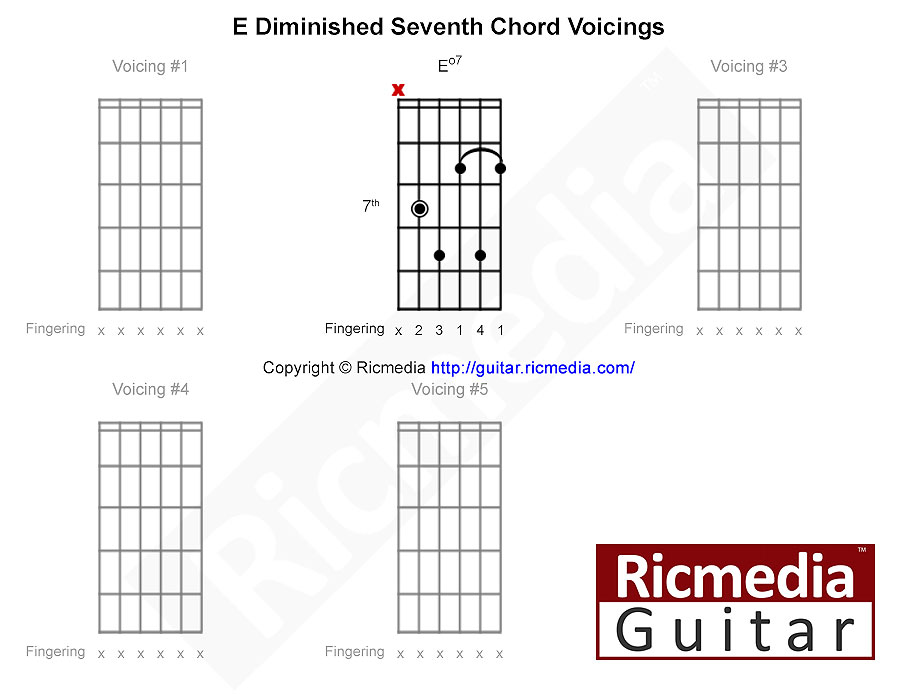
Now let's arpeggiate an E diminished seventh chord (aka: full diminished seventh) taking note that this chord has a double flat seventh (enharmonic to a major sixth), a flat fifth and minor third intervals. This particular chord voicing has its root on the fifth string so we are looking at either position #1 or #2. Looking further, the flat fifth on the fourth string and the minor third on the second string both belong to position #2, so let's go ahead and use this position. Our best bet is to use the standard minor seventh flat five arpeggio pattern #2 except lower the seventh by a semitone, now click on the arpeggio tab further below to see the result.
Tip: Start the pattern using your third finger.
E Dominant seventh sharp ninth chord & arpeggio
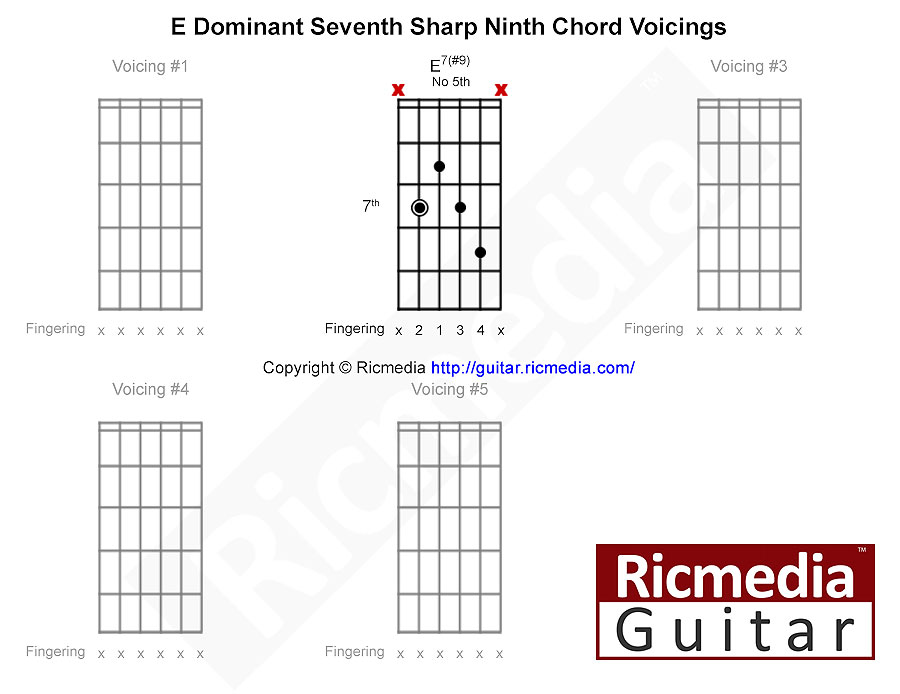
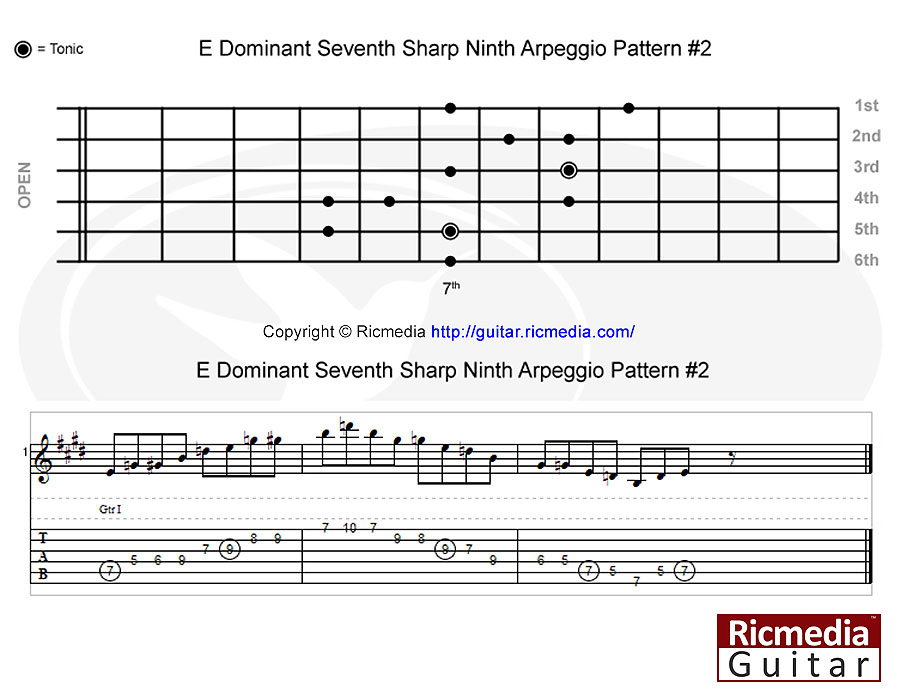
Onto our third chord now which is an E dominant seventh sharp ninth chord and is pretty much self explanatory, a dominant seventh chord with an added sharp ninth degree. This does however pose a small problem, we are going to end up with an arpeggio that has both minor and major third degrees (sharp ninth being enharmonic to a minor third). I personally tend to leave out the sharp ninth when it falls on the fourth, fifth or sixth strings and instead use it on the first, second and third strings which actually matches the chord voicing perfectly most of the time, I have however, included all sharp ninths that occur in this pattern.
This chord voicing has its root on the fifth string so again we are looking at either position #1 or #2, but at a glance I can see the minor seventh and the sharp ninth belong to position #2 so we will go ahead and use this position. The obvious choice here is to start with dominant seventh arpeggio pattern #2 and then add the sharp ninth(s) to it, which will also form a five note arpeggio. Now click on the arpeggio tab further below to see the resulting pattern.
Tip: Start the pattern using your third finger, then use your first finger on the next note and slide this finger for the following note (aka: position shift)
A Dominant seventh suspended fourth chord & arpeggio
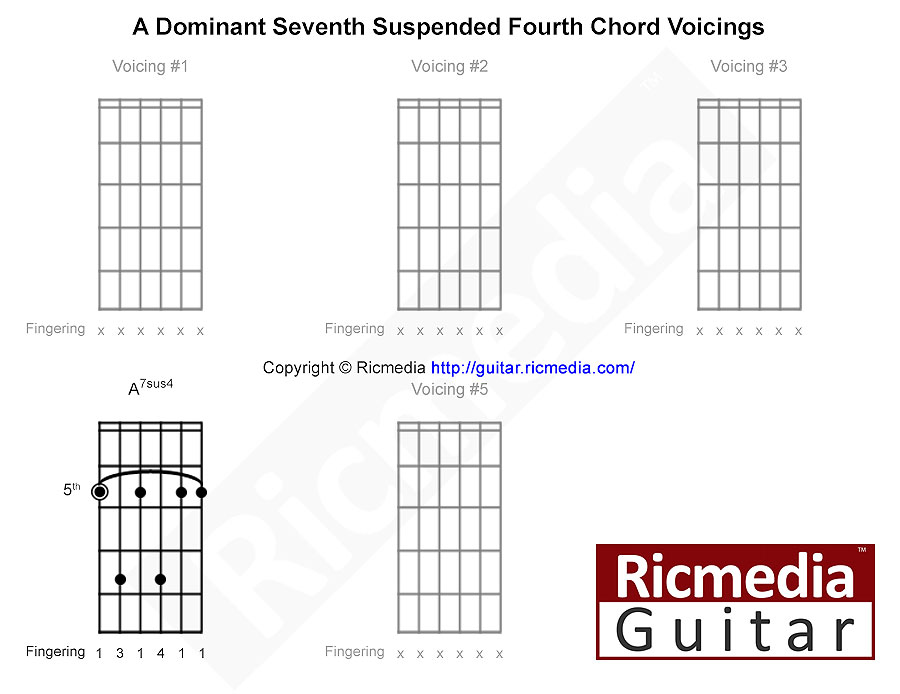
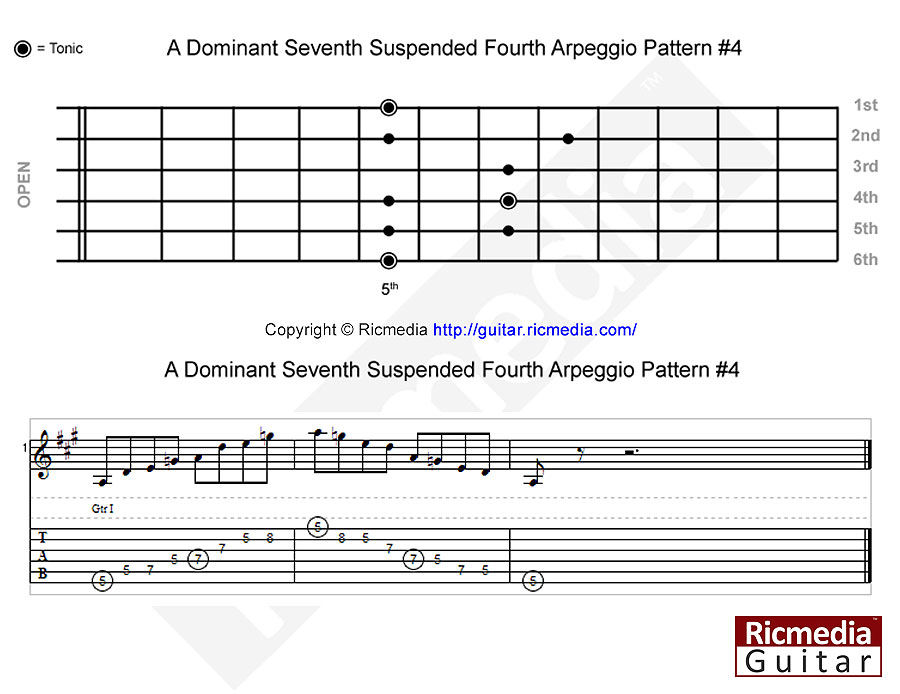
Onto our last chord now which is an A dominant seventh suspended fourth chord remembering that suspended fourth chords do not contain a third degree and this is the same for the arpeggio, however you can resolve to either major or minor third. This chord voicing has its root on the sixth string so we have two positions to consider, position #3 and #4. Looking further I can see most of the notes come from position #4 so let's go ahead and use this position. We will use dominant seventh arpeggio pattern #4 except raise the major third to a perfect fourth on all instances, which will give us our pattern. Now click on the arpeggio tab below and see the result.
Tip: Use your first finger to start the pattern and "roll" this finger to grab the second and fourth notes.
- D7(♭5) chord
- D7(♭5) arpeggio
- E⁰7 chord
- E⁰7 arpeggio
- E7(♯9) chord
- E7(♯9) arpeggio
- A7sus4 chord
- A7sus4 arpeggio

Summary
As you can see it is relatively easy to form arpeggios from chord voicings so long as you follow a set of guidelines:
- Identify what position the arpeggio is likely to come from using the root of the chord
- Using the chord name, identify the most appropriate arpeggio pattern to start with
- Follow the same rules for arpeggios as you do with forming chords (ie: no major third in suspended fourth chord or arpeggio)
- Be careful of which finger to start the arpeggio with, use common sense
Leave a Reply